Meniscus tear rehab exercises you can do at home
Rehab after a meniscus tear is staged. First settle the knee and keep the thigh muscles switched on; then restore full, comfortable bend and straightening; then rebuild strength and control under load. Your surgeon’s or doctor’s protocol always overrides a general guide like this one.
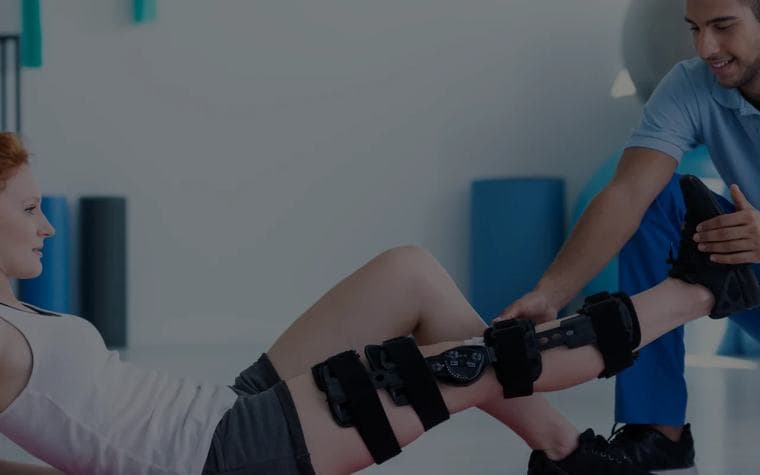
What a meniscus tear is, in plain terms
The meniscus is cartilage that sits between the bones of the knee and cushions them as you move. A tear is common, and not automatically a surgical problem: the NHS describes it as damage that can get better on its own without treatment, though it can take a while, with movement and strength work often recommended along the way and surgery considered where the damage is severe.
That is why this page is written as stages rather than as a week-by-week schedule. Two knees with the same scan move at very different speeds, and the variables that decide it — which part tore, whether anything was repaired, your age, the knee’s history — are known only to the person who examined you.
So, the rule that governs everything below: if your surgeon or doctor has given you a protocol, theirs wins. Where a restriction has been set on how far you may bend the knee or how much weight you may put through it, that restriction is not a suggestion, and nothing on this page overrules it.
Who this is for — and who it is not
This guide is written for a knee that has been looked at, is settling, and belongs to someone who can move about the house. It is general information, not a programme written for you.
It is not for you today if nobody has examined the knee yet, if it locks or will not straighten, if it gives way under you, if you cannot put weight on it, or if it is hot, red and swollen with a temperature. It is also not for you if a surgeon has put you inside a range or weight-bearing restriction after a repair — in that case the only programme that applies is theirs. Get seen first; the exercises will keep.
Settle the knee, and keep the thigh awake
The first job is calm. Swelling and pain switch the quadriceps off within days, and a thigh that has switched off is the commonest reason a knee stays weak for months. Early work is small, frequent and unspectacular — and it matters more than anything you do later.
- Thigh squeeze. Sit with the leg straight out, a rolled towel under the ankle. Tighten the thigh so the back of the knee presses gently down, hold five seconds, release. Ten repetitions, several times a day. The kneecap should glide slightly upward — that is the muscle answering.Stop if the knee catches or the pain sharpens along the joint line rather than spreading through the muscle.
- Ankle pumps. Point and flex the foot slowly, twenty times, whenever you have been sitting a while. Unglamorous, and it keeps the leg from stiffening.
- Supported heel slides. Lying down, slide the heel towards you as far as it goes easily, then straighten again. Six to eight slow repetitions — the habit of movement, not the range.Stop if the knee locks or refuses to straighten fully — that needs a medical opinion before you continue.
- Straight-leg raise, once the thigh squeeze is solid. Lying down, knee locked straight, lift the whole leg about thirty centimetres, hold two seconds, lower with control. Six to eight repetitions — not before you can hold the thigh squeeze without the knee sagging.Stop if the knee bends as the leg lifts. Go back to the thigh squeeze for another few days.
The NHS self-care advice for the first few days is the ordinary sensible kind — rest the knee, keep an ice pack wrapped in a towel on it for up to twenty minutes every two to three hours, and keep weight off it where you can. The work above is gentle enough to sit alongside all of that.
Get the bend and the straightness back
Once the knee has calmed and the thigh answers reliably, the goal becomes range. A knee that will not straighten fully changes how you walk, and a walk that changes for long enough starts a queue of other complaints — hip, back, the other knee. Straightening is the priority; bend follows.
- Heel prop. Sit with the heel on a low stool and nothing under the knee, and let gravity work for two or three minutes. Uncomfortable is expected; sharp is not.Stop if pain builds rather than fades over the two minutes.
- Assisted knee bend. Seated, hook the good leg behind the recovering one and guide it gently further into bend, hold ten seconds, release. Six repetitions. A little more each week, not each day.Skip this entirely if you have been given a limit on how far the knee may bend — forced flexion is a common restriction after a repair. Stop if anything clicks painfully or the knee gives way.
- Small-arc cycling. On a stationary cycle with the seat set high, rock the pedals back and forth through the range you have, then make full turns once they are comfortable. Five to ten minutes.Stop if the knee swells more in the hours afterwards — the classic sign of too much, too soon.
- Walking, deliberately. Short and level, with an even stride and a heel that strikes the floor. Walking badly for distance sets a limp that outlasts the injury.
Use swelling as your speedometer: a knee that is warmer, fuller or stiffer the next morning is telling you the dose was too high. Repeat last week rather than pressing on.
Rebuild strength and control under load
This is the stage most people skip, and it is why knees give trouble again a year later. A knee that bends and straightens is not yet a knee you can trust on a wet staircase.
- Sit-to-stand, high chair first. Stand and sit from a firm, high seat without using your hands, eight to ten times. Lower the seat by a cushion each week as it gets easy.Stop if the knee drifts inward as you rise — do fewer, slower, and watch the kneecap track over the middle toes.
- Step-ups on a low step. Lead up with the recovering leg and come down slowly under control — the harder half. Six to eight each side. Raise the step only when the slow descent is quiet.Stop if the knee feels like it might buckle. Hold a rail and lower the step.
- Calf raises and hip work. Twelve to fifteen calf raises holding a counter, plus side-lying leg lifts and bridges twice a week. Strong calves and hips carry load the knee would otherwise take, and both are weaker after an injury than they were before it.
- Single-leg balance. Thirty seconds beside a counter, progressing to a folded towel underfoot. Balance is what stops a stumble from becoming a fall.Stop if you need to grab the counter repeatedly — shorten the hold rather than fighting it.
Deep squatting, kneeling, twisting on a planted foot and running are the last things to return, and they return on your surgeon’s or doctor’s say-so, not on how good the knee feels that morning.
When to get an expert
Get medical help promptly if the knee locks and will not straighten, if it gives way under you, if it is badly swollen or has changed shape, if you cannot put weight on it, or if it turns hot and red with a temperature — the NHS lists that last as a possible sign of infection. In India, the emergency number is 112.
Beyond that, a general guide has an obvious limit: it cannot watch you move. An expert sees the knee drifting inward on the fourth repetition, notices the limp you stopped noticing weeks ago, and changes the dose in the room rather than a fortnight later.
Your doctor may also refer you for physiotherapy, a regulated clinical service and a different thing from what we do. MoveU offers rehab & mobility programs, not physiotherapy. Our certified experts run the movement and strength side of a recovery in your own home — the staged programme, the load progressed sensibly, the balance work nobody does alone — alongside your medical care, never in place of it. Where your condition calls for it, and with your consent, we coordinate with your treating doctor.
You can meet Vikas Rathi, our founder and lead expert in rehab and chronic-condition care, before you decide anything.
How long does recovery from a meniscus tear take?
It varies widely, and nobody can give you a date from a web page. The NHS notes a meniscus tear can get better on its own without treatment, but that it can take a while. What recovery depends on — which part tore, whether anything was repaired, your age and the knee’s history — is known only to the person who examined you.
What you can control is the sequence: settle the knee, restore movement, then rebuild strength. Skipping the first stage almost always lengthens the third.
Should I walk on a knee with a meniscus tear?
Usually yes, within the limits you have been given, and once the knee has settled enough to walk without a limp. Short level walks beat long ones early on. If you have been told to keep weight off the leg, or you are on crutches, follow that — a general guide does not know what your scan showed.
Watch what happens afterwards rather than during. Extra swelling or stiffness the next morning means the distance was too far.
Can exercise alone be enough, or is surgery needed?
That is a decision for your surgeon or doctor, made from your examination and imaging — not from a routine on a website. The NHS describes surgery as something considered where the damage is severe, with movement and strength work often recommended otherwise. Either way the strength work matters, and the useful question to ask at your appointment is which stage above you are cleared for.
Sources
- NHS — Meniscus tear (knee cartilage damage). Source for what the meniscus is, for a tear being able to get better on its own though it can take a while, for the early self-care advice (rest, ice pack wrapped in a towel for up to 20 minutes every 2 to 3 hours), and for surgery being considered where the damage is severe.
- NHS — Knee pain. Source for the urgent warning signs quoted above: a knee you cannot move or put weight on, a knee that is badly swollen or has changed shape, and heat or redness with a high temperature.
More from the journal
Back pain exercises you can do at home
How often should seniors exercise?
Rehab & mobility programs, run in your own home
A certified MoveU expert reads the protocol you have been given, watches how the knee actually moves, and builds the staged programme around it — at home anywhere in Delhi-NCR, or live over video wherever you are. The first consultation is free.
Book Your Free Consultation Chat on WhatsApp
Or read more about our rehab & mobility programs at home.
Written by MoveU · Last updated